

Green Cards

This category contains both family-based and employment-based green cards.

Divorce After Permanent Green Card Issued – Immigration Effect?

Divorce After Permanent Green Card Issued: Overview

“Divorce after permanent green card issued” is a thought that may keep you up late at night. You may be contemplating the effect that a divorce may have on your immigration status. It is very common in America for a marriage to end in a divorce. The entire divorce process comes with great uncertainty and it is especially important for you to know your legal rights when this unfortunate situation happens. An experienced immigration attorney that charges a reasonable fee is your best bet, in these circumstances.

Divorce Consequences for Ten-Year Green Card Holders

U.S. Citizenship Eligibility After a Divorce

A divorce won’t affect your permanent resident status as long as you didn’t commit marriage fraud. If you’re divorced, you may need to wait a few more years to apply for U.S. citizenship than if you were married and living with your spouse. As a married lawful permanent resident, you can apply for citizenship three years after receiving permanent residence. As a divorcee, you must wait five years. Some exceptions apply, such as for VAWA divorcees, who can apply in three years.

If you’re applying for naturalization, you must notify USCIS about your divorce. However, if you want to keep your green card, the I-90 renewal form doesn’t ask about your marital status. There’s no need to panic if you’re divorced and want to become a U.S. citizen. Your ex-spouse doesn’t need to sign the N-400 form or attend your interview. If USCIS approves your application, you can become a U.S. citizen, even after a divorce, after permanent green card issued.

Divorce Consequences for 2-Year Green Card Holders

Removing Conditions from a Two-Year Green Card Without Your Spouse

The immigration consequences of a divorce are more complicated for two-year green card holders than for ten-year holders. A two-year green card, also called a conditional residence card, cannot be renewed. You must apply to USCIS to remove the conditions within 90 days before the card expires. There’s one exception: if your divorce is finalized after you were granted conditional residence, you can file your I-751 petition before the 90-day window.

When it’s time to file the I-751, both you and your spouse must sign and submit the application if you’re still married. If your spouse isn’t cooperating, an experienced immigration attorney can help you explore legal strategies to resolve your case. If you’re no longer married, check the box on the application to apply for a divorce waiver. You won’t need your spouse’s signature if you’re applying for the waiver.

Divorce After Permanent Green Card Issued

Immigration and Divorce Attorney, Cheryl Fletcher.  Flat Fees– No surprises.

Five Waivers Are Available for You to File Your I-751 Petition Without Your Spouse

According to U.S. immigration law, there are five different circumstances in which you can file the I-751 form without your spouse:
1. You entered the marriage in good faith, but your spouse subsequently died.
2. You entered the marriage in good faith, but you have been battered or subject to extreme cruelty by your petitioning spouse.
3. Your conditional resident parent entered the marriage in good faith, but you have been battered or subject to extreme cruelty by your parent’s U.S. citizen or lawful permanent resident spouse or by your conditional resident parent.
4. The termination of your status and removal from the United States would result in extreme hardship.
5. You entered the marriage in good faith, but the marriage was later terminated due to divorce or annulment.

The last situation is most pertinent to this article. If you are divorced at the time that you are filing the I-751 petition, you must prove that you and your spouse entered into a good faith marriage and did not do so to evade immigration laws.

What Happens if You Do Not File Your I-751 Petition to Remove Conditions?

If you do not file the I-751, you will automatically lose your conditional permanent resident status. Additionally, the U.S. government can deport you. This is a mistake you do not want to make. It is best to file your application on time.

If the deadline has passed, you may still be able to file late and explain the delay to USCIS. On a late application, you must prove that the delay was not your fault and provide a written explanation asking USCIS to excuse the late filing. You must show that the delay was due to extraordinary circumstances beyond your control and that the delay was reasonable.

It’s important to note that for a divorce waiver, you must be single when USCIS decides on your I-751 petition. Legal separation counts as married for USCIS. If you’re filing without your spouse, you may need a quick divorce to avoid harming your immigration case. An attorney who specializes in both immigration and family law can help you finalize your divorce without delay.

Divorce Process and Requirements for Green Card Holders

Getting a divorce after receiving your permanent green card may not be ideal, but you can navigate this chapter successfully. Most U.S. states require a residency period to file for divorce. In Florida, it’s six months, but other states may differ. Most states also allow “no-fault divorce,” meaning you don’t have to prove who caused the marriage to fail. You only need to state that the marriage is broken and that it cannot be fixed by court, therapy, or counseling.

Check your state’s laws to understand what is required for your divorce. If you have minor children or property, the divorce may take longer. You will need to negotiate custody and property agreements. If the divorce is amicable, you might finalize the agreement in weeks. If it’s adversarial, the case may go to trial and take years.

Your I-751 application may be pending for years while your divorce is also ongoing. The key point is that your divorce must be final when USCIS decides on your application.

How Can an Immigration and Divorce Attorney Help?

Practicing on your own immigration and divorce case is never a good idea. There is too much room to make many mistakes. Some of these mistakes are irreversible and could lead to deportation. A qualified immigration and divorce attorney can answer all your questions, properly prepare evidence and devise the best legal strategy to help you win your case. You also gain peace of mind, knowing that your case is being handled with legal expertise.

My name is Cheryl Fletcher and I have been a divorce and immigration attorney since 2015. I have helped hundreds of immigrants overcome unexpected immigration and divorce issues. If you would like a personal evaluation of your case, please contact us right away to schedule a consultation.

Sources: U.S. Citizenship and Immigration Services, “After a Green Card is Granted” Accessed May 16, 2018

U.S. Citizenship and Immigration Services, “Conditional Permanent Residence” Accessed May 16, 2018

Immigration attorney fees

Marriage Green Card Adjustment of Status

Will I Have to Leave the USA to Adjust My Status?

It depends. If you entered the U.S. lawfully, even if you overstayed your visa and you are now married to a U.S. citizen, it is highly unlikely that you will have to the leave the USA to get your green card. If you are married to a lawful permanent resident and you have fallen out of status, more than likely, you will have to attend your immigrant interview abroad. If you entered the USA illegally, you won’t be able to adjust your status and you will have to do consular processing for your green card.

Visa Overstay to Marriage Green Card- Adjustment of Status Checklist

1. Inspected and Admitted or Paroled: This typically means that you arrived in the U.S. by a visa, or ESTA or you were given permission to land temporarily.

2. Visa Availability: An immigrant visa number must be immediately available to you at the time that you file your adjustment of status application.

3. Bona Fide Marriage: You must intend to establish a life with your U.S. citizen spouse. You cannot be getting married just for the green card.

4. Medical and Security Clearances: You must pass a medical examination where you have no Class A or Class B medical conditions. Some exceptions apply. You must also not pose a threat to the safety and security of the United States.

5. Unauthorized Employment: As the spouse of a U.S. citizen, you will be forgiven for working without authorization. If your spouse is a lawful permanent resident, you may not be forgiven and your adjustment of status application will likely be denied.

Attorney, Cheryl Fletcher

How We Can Help You Win Your Adjustment of Status Case?

affordable flat fees*

You can get started with as little as $2,500 down and we offer a flexible monthly payment arrangement for the remaining balance.

Experienced attorney

We’ve been practicing for nearly 10 years and have helped hundreds of clients just like you.

HIGH APPROVAL RATE

Over 90% of our I-485 Adjustment of Status Applications for a Green Card have been approved.

What Our Clients Say

“I want to extend my deepest gratitude to my lawyer, Mrs. Fletcher, for her unwavering support and dedication throughout the process of obtaining my green card and my mother’s citizenship.”

Caleer Cam

Google Review

“Miss Cheryl Fletcher law office is a great and dedicated service that help our company visa beneficiary with his immigration documents and application process.”

Phoenix Gym

Google Review

“Miss fletcher law office is a dedicated service that help me and my daughter with our immigration paper. She go above and beyond to make sure everything work in our favor.

Janice Bedford

Google Review

Divorce with Conditional Green Card

Will You Lose Your Immigration Status Because of a Divorce?

The short answer is no. However, you must be careful to follow specific steps to improve your chances of getting a 10-year permanent resident green card.

Important Steps to Help You Win Your 10-Year Green Card Case

1. Evidence: Gather all evidence proving that you entered into a bona fide marriage with your spouse. Your spouse may try to destroy these documents to make your life difficult.

2. Divorce: Get your divorce finalized before USCIS makes a decision on your I-751 Petition to Remove Conditions on Residence.

3. Filing Requirements: Within 90 days before your two-year green card expires, you must file your I-751 Petition. Your spouse may refuse to sign it but that is okay, you can request a divorce waiver.

4. Attorney: This process can get complicated because USCIS may assume that your marriage was fraudulent, if your case is not presented properly. Hire an affordable and skilled immigration attorney to help you avoid mistakes and potential issues in your case.

Attorney, Cheryl Fletcher

How We Can Help You Get the Peace of Mind You Deserve

affordable flat fees*

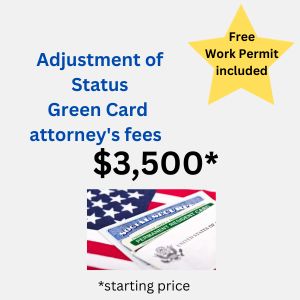
We charge $3,500 for our attorney’s fees and we offer payment plans.

Experienced attorney

We’ve been practicing for nearly 10 years and have helped hundreds of clients just like you.

HIGH APPROVAL RATE

Over 90% of our I-751 Petitions to Remove Conditions on Residence have been approved.

What Our Clients Say

“I want to extend my deepest gratitude to my lawyer, Mrs. Fletcher, for her unwavering support and dedication throughout the process of obtaining my green card and my mother’s citizenship.”

Caleer Cam

Google Review

“Miss Cheryl Fletcher law office is a great and dedicated service that help our company visa beneficiary with his immigration documents and application process.”

Phoenix Gym

Google Review

“Miss fletcher law office is a dedicated service that help me and my daughter with our immigration paper. She go above and beyond to make sure everything work in our favor.

Janice Bedford

Google Review

USCIS Immigration Adoption Requirements Explained

USCIS Immigration Adoption: Overview

USCIS immigration adoption requirements will depend on whether the county you are planning to adopt from is a Hague Adoption Convention or a Non-Hague Adoption Convention country. If you are adopting from a Hague country that child is called an “adoptee” while the non-Hague child is called an “orphan.” Both parents do not have to be deceased for the child to be an orphan as you will learn later in this article.

Eligibility Requirements to Adopt Hague Convention Children

  1. U.S. Citizenship: You must be a U.S. citizen to be able to adopt. Lawful permanent residents are ineligible.
  2. Child’s Residence: The child must be living in a country that is party to the Hague Convention on the Protection of Children and Cooperation in Respect of Intercountry Adoption.
  3. Marital Status: If you are married your spouse must also adopt the child. If you are unmarried, you must be 25 years of age or older. Additionally, the child must be unmarried.
  4. Legal custody and joint residence requirements: You do not have to meet the 2-year legal custody and joint residence requirements, if you are adopting from a Hague country. Additionally, you must be a habitual resident of the U.S.
  5. Child’s Age: The adoption must be finalized before the child’s 16th birthday and the visa petition must be filed before the child’s 16th birthday.
  6. Birth parents: The child’s birth parents must freely give their written irrevocable consent to the termination of their parental rights.
  7. Home study: A home study must be conducted and approved before the child may immigrate to the U.S.

Eligibility Requirments for Non-Hague Orphan Children

U.S. classifies non-Hague children as orphans. Prospective parents must file I-600, Petition to Classify Orphan as an Immediate Relative, in conjunction with Form I-600A, Application for Advance Processing of Orphan Petition, to see if the child qualifies to immigrate to the United States.

  1. U.S. Citizenship: You must be a U.S. citizen to be able to adopt. Lawful permanent residents are ineligible.
  2. Child’s Residence: The child must be living in a country that is party to the Hague Convention on the Protection of Children and Cooperation in Respect of Intercountry Adoption.
  3. Marital Status: If you are married your spouse must also adopt the child. If you are unmarried, you must be 25 years of age or older. Additionally, the child must be unmarried.
  4. Legal custody and joint residence requirements: You do not have to meet the 2-year legal custody and joint residence requirements, if you are adopting from a Hague country. Additionally, you must be a habitual resident of the U.S.
  5. Child’s Age: The adoption must be finalized before the child’s 16th birthday and the visa petition must be filed before the child’s 16th birthday.
  6. Birth parents: The child’s birth parents must freely give their written irrevocable consent to the termination of their parental rights.
  7. Home study: A home study must be conducted and approved before the child may immigrate to the U.S.

Who Can Sponsor for Adjustment of Status?

Who Can Sponsor for Adjustment of Status? Overview

“Who can sponsor for adjustment of status?” is a great question to ask yourself before filing form I-485. Not every adjustment of status applicant will need a sponsor but for those who do, there are certain minimum income requirements. Each year the U.S. government publishes the federal poverty guidelines on form I-864P Poverty Guidelines for Affidavit of Support. The point of having a sponsor is to prevent the intending immigrant from relying on public benefits should he or she fall into poverty. Rather, the sponsor will be financially responsible for support in these circumstances.

Do You Need a Sponsor?

Form I-864 Affidavit of Support is a contract between the sponsor and the U.S. government. Most family-based immigrants and some employment-based immigrants need this form.

Form I-864 Needed Form I-864 Not Needed
All immediate relatives of U.S. citizens:

  • Spouses
  • Unmarried children under 21 years of age
  • Parents of U.S. citizens

All family-based preference immigrants:

  • unmarried adult children of U.S. citizens
  • married children of U.S. citizens
  • spouses of lawful permanent residents
  • unmarried adult children of lawful permanent residents
  • brothers and sisters of U.S. citizens

Employment-based preference immigrants:

  • U.S. citizen, lawful permanent resident or U.S. national  relative filed immigrant visa petition; or
  • U.S citizen, lawful permanent resident or U.S. national owns 5% or more ownership interest in the petitioning company.
VAWA self-petitioners

Self-petitioning widows or widowers

Special immigrants

Intending immigrants who have earned 40 qualifying quarters of  work in the U.S.

Any intending immigrant who will acquire U.S. citizenship upon admission

Diversity immigrants

Refugees and asylees

Immigrants applying under the Cuban Adjustment Act

Haitians adjusting under the Haitian Refugee Immigration Fairness Act of 1998 and the Help Haiti Act of 2010

Who Can Sponsor for Adjustment of Status? Basic Eligibility Requirements

A sponsor must be:

  • at least 18 years of age
  • a U.S. citizen, U.S. national or lawful permanent resident.
  • domiciled in any of the 50 states, the District of Columbia, or any territory of possession of the United States
  • petitioning for admission of the intending immigrant
  • able to demonstrate the means to maintain an annual income equal to at least 125% (100% for active duty military members) of the federal poverty line

A sponsor does not have to be related to you. A sponsor’s income may be wages, business income, retirement benefits or any other type of lawfully obtained income. If the income is insufficient assets may be used.

Joint Sponsors, Household Members and Substitute Sponsors

If the petitioner’s income is insufficient, a joint sponsor can be used to assist in meeting the income requirements. The joint sponsor must meet the same eligibility requirements as the petitioner/sponsor and complete form I-864. If the additional sponsor is a member of the petitioner’s household, that person would be classified as a household member and would complete form I-864A.

A substitute sponsor is used when the petitioner passes away before all qualified family members have immigrated. A substitute sponsor must be related to you and be either your spouse, parent, mother-in-law, father-in law, sibling, child (at least 18 years of age), son, daughter, son-in-law, daughter-in-law, sister-in-law, brother-in-law, grandparent, grandchild or the legal guardian.

Affidavit of Support Immigration Attorney

My name is Cheryl Fletcher and I have been an immigration attorney since 2015. I have been assisting families successfully navigate the complex immigration process. After reading this article you should have a better understanding of who can sponsor an adjustment of status applicant.  An immigration attorney  is invaluable during this process. I would like the opportunity to work with you.

who can sponsor for adjustment of status

Who Qualifies for Adjustment of Status?

Who Qualifies for Adjustment of Status: Overview

“Who qualifies for adjustment of status?” is a very broad question that covers a large group of people. An adjustment of status application allows you to obtain your green card in the U.S. without leaving to attend an interview at the U.S. embassy/consulate abroad. There are many different categories through which you may apply to obtain permanent residence. These include family-based, employment-based, special immigrant, refugee or asylum, human trafficking and crime victims, victims of abuse, registry, diversity lottery, and Cuban adjustment. United States Citizenship and Immigration Services’ (USCIS) form I-485 Application to Register Residence or Adjust Status is the correct application to use to apply for adjustment of status.

I-485 Adjustment of Status: Basic Eligibility Requirements

Although adjustment of status covers many immigrant visas categories, all adjustment of status applications have certain basic criteria that you should meet.

  1. Physical presence: You must be physically present in the United States to apply for adjustment of status.
  2. Immigrant petition: You must be the beneficiary of an immigrant petition. For some cases, such as VAWA and immediate relative filing, the immigrant petition may be filed simultaneously with the adjustment of status application. In other cases, you must wait until the immigrant petition is approved before you are eligible to file for adjustment of status.
  3. Lawful entry: You must have been inspected and admitted or paroled into the U.S., with a few notable exceptions. If you are an asylee, VAWA self-petitioner, special immigrant juvenile, registry applicant, certain T nonimmigrants or U nonimmigrants, you do not have to prove that you had a lawful entry. If you were admitted after April 30, 2013, you may have been issued an electronic form I-94. The I-94 is proof that you were lawfully admitted and it shows your authorized period of stay. You can obtain the most recent copy of your I-94 from U.S. Customs and Border Protection.
  4. Two passport-style photographs: You are required to submit two-passport style photographs of yourself, taken within the last six months.
  5. Government-issued Identification: You should submit a copy of a government-issued identification that has your photograph. This can be your passport, driver’s license, national voter’s card or military identification. The document is acceptable, even if it is expired.
  6. Birth certificate: You must submit a photocopy of your birth certificate, unless you are a refugee or asylee. USCIS only accepts long-form birth certificates, which lists at least one parent. If your birth certificate does not exist, you must prove why it is unavailable. Secondary evidence such as medical records, hospital or school records can be used to prove the facts of your birth. If your home country does not normally issue birth certificates, you should include a copy of the reciprocity table with your application, showing that birth certificates are unavailable in your home country. You do not need to submit secondary evidence relating to your birth if birth certificates are generally unavailable in your home country.

Who Should Not Apply for Adjustment of Status?

While it is important to understand “who qualifies for adjustment of status,” it is equally important to understand who does not qualify for adjustment of status. You should not apply for adjustment of status if you are “inadmissible” and you are not eligible for a waiver. Inadmissibility means you have done something in the past or you have certain medical issues that will prevent you from being approved for permanent residence. A waiver is “forgiveness” for certain past conduct and medical conditions. An approved waiver application allows you to adjust your status. For some types of issues, there is no waiver available and no matter how much of a good person you are, you simply won’t be able to get a green card.

who qualifies for adjustment of status

What Grounds of Inadmissibility can be Waived?

There are several grounds under which you may be found to be inadmissible. Some of the most common ones are listed below. An I-601 waiver application covers most grounds of inadmissibility. However, there is also an I-192 waiver application for T or U visa applicants, where applicable, and an I-212 waiver application, if you have have previously been deported from the U.S. Furthermore, if your only issue is unlawful presence, you are physically located in the U.S. and you are will be applying for your green card from abroad, the appropriate waiver could be an I-601A. An experienced immigration attorney can help you decide on the appropriate waiver or even if you need a waiver for your particular case.

Medical or Health-Related Waiver

If you have certain diseases that will endanger public health, you are inadmissible and will need a approved I-601 waiver to obtain permanent residence. Some of the most common diseases are tuberculosis, gonorrhea, syphilis and leprosy. In addition, if you have any disease that the U.S Secretary of Health and Human Services deems communicable, you will need a waiver. A health-related waiver also covers vaccinations and mental-health disorders. If you are sincerely opposed to vaccinations based on religious beliefs or moral convictions, you may be eligible for a waiver. Furthermore, if you engage in harmful behavior based on a metal disorder, you should apply for a waiver.

Who Qualifies for Adjustment of Status: Unlawful Presence Waiver

If you have been unlawfully present in the U.S. for longer than 180 days but less than one year, you are subject to a 3-year bar. If unlawfully present for more than one year, you are subject to a 10-year bar. Immediate relatives of U.S. citizens, VAWA applicants, certain physicians and their accompanying spouse and children, G-4 and Nato-6 employees and their family members, special immigrant juveniles and certain military members and their spouse and children are exempt from the unlawful presence bar. If you are not exempt and have violated the unlawful presence rule, you may be eligible for an I-601 waiver or an I-601A provisional waiver.

Unauthorized Employment Inadmissibility Ground

There is no waiver available for working without authorization. However, certain categories of people are exempt from this rule. Immediate relatives of U.S. citizens, VAWA applicants, certain physicians and their accompanying spouse and children, G-4 and Nato-6 employees and their family members, special immigrant juveniles and certain military members and their spouse and children can work without authorization and still be eligible for a green card. If you do not fall into one of those groups, you are inadmissible and your green card application will likely be denied.

Financial/Public Charge Inadmissibility Ground

Most adjustment of status applicants are required to prove that they are not likely to rely on the U.S. government for public benefits. For family-based applications an I-864 Affidavit of Support form is required. This form is a contract between your visa petitioner and the U.S government. The petitioner must prove that they will financially support you so that you do not fall into poverty. If the petitioner’s income does not meet the standard in the annual federal poverty guidelines they can ask a joint sponsor or an household member to join the petition.

Employment-based petitioners are not required to complete an I-864 form, unless they have sponsored a relative or the relative owns 5% or more of the sponsoring entity.

VAWA applicants and intending immigrants who have earned 40 qualifying credits of work credits are exempt from filing an I-864 form. Similarly, any immigrant who will attain U.S. citizenship upon admission, is exempt.

Receiving public benefits before or while your green card application is pending is a fact that the immigration officer will take into consideration when deciding whether to approve your application. You will not automatically be denied if you took public benefits. However, if it is more likely than not that you will become a public charge, then the application will likely be denied. A skillful attorney can argue your position well.

Fraud, Misrepresentation and False Claims to U.S. Citizenship Waiver

If you lied, tendered false documents or committed any other type of fraud or misrepresentation to obtain an immigration benefit, you may need to apply for a fraud waiver. This can be done on form I-601.

You may have falsely claimed to be a US citizen in oral interviews or written applications. Special immigrant juveniles and registry applicants are exempt from this rule. Generally, there is no waiver available for false claim to U.S. citizenship for most applicants. However, refugees and asylees who are seeking adjustment of status may be granted a waiver. As of September 30, 1996, if you made a false claim to U.S citizenship, you are inadmissible. You may be eligible for a waiver under the fraud and misrepresentation ground, if the false claim was made before the stated date.

J Nonimmigrant Foreign Residence Requirement Waiver

 If you entered the United States as a J-1 or J-2 nonimmigrant exchange visitor and you are subject to the 2-year foreign residence requirement, you should not apply for adjustment of status. You should return to your home country for 2-years, or obtain a waiver recommendation letter from the U.S. Department of State. Not all exchange visitors are subject to the 2-year foreign residence requirement. Some are automatically granted a waiver at the time that they are approved for a visa.

Who Qualifies for Adjustment of Status: Criminal and Alien Smuggling Waiver

The criminal grounds under which you may be excluded from getting a green card are vast. There is no waiver available for drug possession and distribution offenses, except simple possession of 30 grams or less of marijuana. There is a waiver available for certain crimes involving moral turpitude such as theft offenses, multiple convictions, and prostitution. Committing murder or torture prevents you from ever getting a green card.

Alien smugglers are inadmissible but there is a waiver available under certain circumstances. If you smuggled or assisted with smuggling anyone other than your spouse, parent, son, or daughter to the United States, you will not be approved for a waiver.

Section 245(i) Civil Penalty: Waiver of Inadmissibility

Section 245(i) of the Immigration and Nationality Act allows certain individuals who are present in the United States who would not normally qualify to apply for adjustment of status in the United States to obtain lawful permanent residence (get a Green Card) regardless of:

  • The manner they entered the United States;
  • Working in the United States without authorization; or
  • Failing to continuously maintain lawful status since entry.

If you are the beneficiary of a labor certification or immigrant visa petition, filed on or before April 30, 2001, you could be 245(i) eligible. In most cases you will have to pay a $1,000 fine in addition to the filing fee.

Illegal Entry, Removal and Deportation Waiver

If you entered without inspection and you were not admitted or paroled, you will most likely be unable to obtain your green card through adjustment of status. This rule does not apply to VAWA applicants, asylees and refugees. If you are the beneficiary of a family-based petition and this is your situation, you may still be able to obtain your green card but you will have to apply through consular processing.

 A previous deportation or removal order that has been executed makes you inadmissible. If you were removed as an arriving alien or through expedited removal, you need consent to reapply, within 5 years. If you were ordered removed, other than as an arriving alien, you need consent to reapply within 10 years and if you were removed more than once, the waiting period is 20 years. If you were ordered removed but never left the U.S. you may be able to reopen your removal case and adjust your status. An I-212 application can be submitted before the requisite amount of time and if you are successful, then you can obtain your green card without waiting the full period.

Immigrant Membership in a Totalitarian Party: Inadmissibility Ground

Let us look at the question “who qualifies for adjustment of status,” regarding Nazis. If you are or have been a communist or a member of a totalitarian party, whether in the U.S. or in a foreign country, you are inadmissible. There is no waiver available for most people. However, your application may be approved for humanitarian purposes or to assure family unity. On the contrary, it will not be approved if you pose a threat to the security of the United States or it goes against the public interest.

Who Qualifies for Adjustment of Status: Immigration Attorney

My name is Cheryl Fletcher and I have been an immigration attorney since 2015. I have helped hundreds of immigrants from many different countries successfully adjust their status. Your search may have started with the simple question: “who qualifies for adjustment of status” but after reading this article you may see that your case could be more complicated. I would like the opportunity to hear about your case and share with you the best legal strategy to help you achieve you goals. Feel free to book a consultation with me. You’ll be glad you did.

who qualifies for adjustment of status

Abused Spouse Green Card -VAWA

“Abused spouse green card” is a popular search term on the internet. This means that there are a number of foreign nationals who are curious about the impact of domestic violence on their immigration status. Fortunately,  in 1994, the United States Congress passed the Violence Against Women Act (VAWA) to provide an immigration benefit to spouses of abusive United States citizens or lawful permanent residents. VAWA also protects men, despite the title of the law.

Eligibility for an Abused Spouse Green Card

To be eligible for an abused spouse green card, here are the requirements:

  • Your spouse is a United States citizen (USC) or Lawful Permanent Resident (LPR);
  • You resided with the USC or LPR spouse;
  • The abuse took place in the United States (exceptions apply for  battered spouses of U.S. government employees and U.S. military members);
  • You have been abused physically or mentally by your spouse, during your marriage;
  • You entered into the marriage in good faith;
  • You are a person of good moral character; and
  • You are otherwise eligible for immediate relative or preference status.

The Immigration Process

Before thinking about the immigration process, you should get to a safe place, away from your abuser. Calling the  National Domestic Violence Hotline, is a good place to start. You may have to move into a shelter or stay with family and friends to escape domestic violence.

The process begins with filing an I-360 petition with United States Citizenship and Immigration Services (USCIS). It takes about 2 years for USCIS to make a decision on the application. There is no filing fee for the I-360 petition. You can file the VAWA case while you are still married to your abuser, however, it is important that if you get a divorce, you do not remarry before the self-petition is approved. If you do this, you will lose your eligibility and the case will be denied.

You should submit all evidence to support your case at the time of filing. You may be eligible for a work permit and a travel document, while the application is pending, if you file an I-485 Adjustment of Status application concurrently. A VAWA self-petitioner is eligible for adjustment of status, when his/her priority date is current. Battered spouses of U.S. citizens may file the I-485 application concurrently, while those who are married to LPRs should check the monthly visa bulletin for status updates on the priority date.

Abused Spouse Green Card Attorney

Cheryl Fletcher is an immigration attorney in Palm Beach Gardens, Florida. In consultations with potential clients, she is frequently asked about obtaining an abused spouse green card. Many of these potential clients are without hope  before coming to her but after evaluating their circumstances, Mrs. Fletcher is able build solid VAWA casesAbused Spouse Green Card.

If you would like to get in touch with Attorney,  Cheryl Fletcher , please call 561-507-5772 to get a fast consultation or fill in the contact form on the website: http://www. lawyerfletcher.com and we will call you right away.

Fiancé Visa With Child-Is this Possible?

“Fiancé visa with child” is one of the most searched for phrase on the internet, by people who have an interest in the U.S. fiancé visa process. If you have children from a previous relationship and you are looking to move to America on a fiancé visa, you may be wondering how to bring your children with you. The good news is that U.S. immigration law creates a visa for this exact situation.

Unmarried children, under 21 years old, of a fiancé visa (K1) holder are eligible for a K2 visas. A single petition for the K1 and K2 is sufficient. If a K2 visa is issued to the child he/she may enter the U.S. along with the parent or may follow later.

Fiancé visa with child

Eligibility

The foreign-born parent will have to  meet the requirements of the K1 fiancé visa, independently, for the children to qualify as a dependent beneficiary. The process begins when the United States citizen partner files an I-129f petition, listing you and your children, as beneficiaries. It takes about six months for United States Citizenship and Immigration Services (USCIS) to make a decision on the application. If you have a favorable decision, the file is sent to the National Visa Center (NVC), for further processing.

K-3 Fiancé Visa Application for Your Child

You will complete separate DS-160 non-immigrant visa applications for yourself and qualifying children, through the appropriate embassy’s/consulate’s online portal. You will also pay separate visa fees for yourself and your children. The children will need  medical examinations and if they are 16 years or older, they will need police certificates for every country where they have lived for six months or more, from the age of 16.

Visa Approval and Travel

If your K1 visa and your children’s K2 visa is granted, you are ready to depart to the U.S. The visas are valid for six months. Be sure to have the proper custody documents to show that you have authorization to take the children out of the country.

Entry to the United States

Once you enter the United States, you and yor fiancé have 90 days to get married. After the wedding, you will file  separate I-485 Adjustment of Status applications and pay the appropriate fee, to adjust your and your children’s status to lawful permanent residence.

K1 Fiancé Visa Attorney

Cheryl Fletcher is an immigration attorney in Palm Beach Gardens, Florida. In consultations with potential clients, she is frequently asked, about obtaining a “fiancé visa with child.” Her approach to this question, is to take the time to explain to potential clients the immigration process, regarding this situation.
If you would like to get in touch with Attorney,  Cheryl Fletcher , please call 561-507-5772 to get a fast consultation or fill in the contact form on the website: http://www. lawyerfletcher.com and we will call you right away.

Go to Top