

For many families, a green card is not just an immigration document. It can mean the ability to work without fear, remain close to a spouse or children, travel with greater confidence, and build a stable life in the United States. But the process is rarely as simple as filling out forms. A missed deadline, an old immigration violation, an inaccurate answer, or weak evidence can put an important future at risk.
A green card gives a person lawful permanent resident status. It is a major step toward long-term security and, for many people, eventual U.S. citizenship. The right path depends on your relationship, immigration history, current location, and any issues that may affect eligibility.
What a Green Card Allows You to Do
Lawful permanent residents can generally live and work in the United States indefinitely. They may accept employment without needing a separate work visa, obtain a Social Security number, and in many cases travel internationally and return to the United States.
Permanent residence also creates a possible path to naturalization. Many green card holders may apply for U.S. citizenship after five years, while certain spouses of U.S. citizens may qualify after three years. The timeline depends on the facts of the case, including continuous residence and physical presence requirements.
A green card is powerful, but it is not the same as citizenship. A permanent resident can lose status through abandonment, certain criminal convictions, fraud, or other immigration violations. Long or frequent trips outside the country can also raise questions about whether the person truly intends to make the United States their permanent home.
Common Paths to a Green Card
There is no single application that fits every immigrant. Some people qualify through family, others through work or humanitarian protection. Choosing the wrong category, or filing before the person is eligible, can cause unnecessary delays and expenses.
Family-Based Immigration
Family sponsorship is one of the most common routes to permanent residence. U.S. citizens can petition for immediate relatives, including spouses, unmarried children under 21, and parents. These categories are generally not subject to annual visa-number limits.
Other relatives may qualify through family preference categories. Lawful permanent residents may petition for a spouse or unmarried child, while U.S. citizens may also petition for adult children and siblings. These categories often involve waiting periods because visas are limited by law and demand can be high.
Marriage-based cases require especially careful preparation. Immigration officers look closely at whether the marriage is genuine and was entered into in good faith, rather than solely for immigration benefits. Couples should expect to provide credible evidence of a real shared life, such as joint financial records, housing documents, photographs, communications, and statements from people who know them as a couple.
Employment-Based Immigration
Some foreign nationals qualify through an employer, extraordinary ability, investment, or a position that meets a specific employment-based category. These cases can involve labor certification, employer sponsorship obligations, strict documentation, and shifting visa availability.
Employment cases are not always limited to large companies or highly visible professionals. A person’s education, work history, field, job offer, and country of birth may all matter. Because the rules are technical, a careful review is often needed before an employer or worker invests significant time and money in an application.
Humanitarian and Special Categories
Asylees may be eligible to apply for permanent residence after one year of being granted asylum. Refugees also have a path to permanent residence. Other options may exist for survivors of abuse, crime, trafficking, or certain other serious circumstances.
For example, some spouses and children of abusive U.S. citizens or lawful permanent residents may be able to seek immigration relief without relying on the abusive family member to file a petition. These cases require sensitivity as well as strong evidence. Safety planning and immigration strategy often need to work together.
Adjustment of Status or Consular Processing?
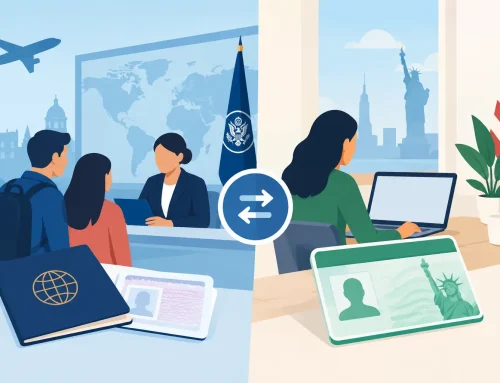
After a person becomes eligible for an immigrant visa, the next question is often where the final process will happen. People already in the United States may be able to apply through adjustment of status. This process allows eligible applicants to seek permanent residence without leaving the country.
Others must complete consular processing through a U.S. embassy or consulate abroad. In some situations, leaving the United States can trigger serious consequences, including a three-year or ten-year unlawful presence bar. That is why someone with an expired visa, prior removal order, unauthorized employment, past misrepresentation, or lengthy unlawful presence should not assume that travel is safe simply because a family member has filed a petition.
Adjustment of status is not available to everyone, and consular processing is not automatically the better alternative. The correct strategy depends on the person’s immigration record and the category under which they are applying.
The Green Card Process: Evidence Matters
Most cases involve more than one form and more than one government agency. A family-based application may require an immigrant petition from the sponsoring relative, an application for permanent residence, financial sponsorship documents, identity records, medical examination results, and proof supporting the underlying relationship.
Applicants may also attend a biometrics appointment and, in many cases, an immigration interview. An officer may ask about the relationship, prior immigration applications, addresses, employment, travel, family history, and the information contained in the forms.
The strongest cases tell one consistent story. Names, dates, addresses, marital history, entries into the United States, and prior immigration filings should match the available records. If there is a discrepancy, it should be identified and addressed honestly. Trying to hide a problem can be far more damaging than explaining it properly.
Financial sponsorship is another frequent issue. In many family-based cases, the petitioner must show the ability to support the intending immigrant. If the petitioner’s income is insufficient, a joint sponsor may be needed. A sponsor’s willingness alone is not enough. The government reviews income, tax records, household size, and legal responsibility.
Issues That Can Put Approval at Risk
Some obstacles can be resolved, while others require a waiver or may make a person ineligible. The answer depends on the details. Common concerns include prior visa overstays, unauthorized work, criminal arrests or convictions, prior deportation or removal orders, false statements to immigration officers, and past marriages that create fraud concerns.
A prior denial does not always mean the case is over. It does mean the next filing should not repeat the same mistake. Before submitting a new application, review the denial notice, prior forms, evidence, interview history, and any changed facts. A stronger filing begins with a clear understanding of what happened the first time.
Do not sign forms you do not understand. Immigration applications are signed under penalty of perjury. Even if someone else prepared the paperwork, the applicant is responsible for the information submitted in their name.
Protecting Permanent Resident Status After Approval
Receiving a green card is a milestone, not the end of immigration responsibilities. Permanent residents should keep their address updated with immigration authorities, carry proof of status as required, file U.S. tax returns when required, and avoid conduct that could create removal concerns.
International travel deserves special attention. A short trip abroad is usually different from leaving the United States for many months or repeatedly spending more time outside the country than inside it. A reentry permit may help in certain situations, but it does not solve every abandonment concern. Before extended travel, consider how the absence will affect both permanent resident status and a future citizenship application.
If you are applying for a green card through marriage, keep in mind that a two-year conditional card may be issued when the marriage is less than two years old at approval. The couple must usually file to remove conditions during the 90-day period before the card expires. Divorce, separation, abuse, or the death of a spouse can complicate this step, but may not eliminate all options.
Immigration decisions can affect an entire family for years. A careful review of your history and evidence before filing can protect more than an application. It can help protect your ability to remain with the people who depend on you and move forward with confidence.