

Green Cards

This category contains both family-based and employment-based green cards.

Does An Immigration Lawyer Cost Too Much?

Immigration Lawyer Cost: Overview

Immigration lawyer cost is definitely something you should think about in your immigration journey. Immigration lawyers mainly help families and asylum seekers, rather than corporate clients. They know that many of their clients struggle to even get work authorization in the U.S.—so they often keep their fees more affordable.

This article will give you an overview of what immigration lawyers typically charge. Just remember, fees can vary a lot depending on factors like where the lawyer practices, the type of case, their level of experience, and how in-demand their services are.

👉 Quick note: never, under any circumstances, hire a “notario,” “immigration consultant,” or anyone else who isn’t a licensed attorney (unless it’s a paralegal working directly under an attorney’s supervision).

Flat Fees vs. Hourly Rates

Most immigration lawyers charge flat fees for common services—like filing a family green card petition or a U.S. citizenship application. This way, you know upfront what the cost will be. Sometimes “add-ons” come with their own set prices, like preparing a waiver of inadmissibility or attending a USCIS interview with you.

Flat fees give clients peace of mind. Even if the lawyer has to put in extra time to fix issues with your application or deal with government delays, you won’t be billed more. Most people prefer this setup because it makes budgeting easier and usually feels like better value.

That said, not every case fits neatly into a flat fee structure. Immigration lawyer costs are more likely to be by the hour when:

  • Your case is unusual or complex. Maybe you have a tricky immigration history, a past criminal record, or country-specific complications.

  • You’re up against a tight deadline. For example, filing for asylum just before the one-year deadline.

  • There’s no clear resolution in sight. Say you’re in removal proceedings and your situation is fluid.

  • You only need quick guidance. If you’ve already filled out most of your application yourself and just want a lawyer to review it.

  • Your case is highly complex. Removal cases with multiple hearings or witnesses can’t always be bundled into a flat fee.

Even with flat fees, lawyers usually add a clause in their contracts that says if something unexpected pops up—like discovering you have a criminal record they didn’t know about—you’ll pay extra, often by the hour.

Immigration Lawyer Cost: Consultation Fees

When you’re still “shopping” for an attorney, expect to pay for the first consultation. Most lawyers charge between $100 and $400. A few offer free consultations, but many can’t afford to because so many potential clients don’t actually have a viable case.

Tip: Don’t sign a contract right away. It’s smart to meet with at least two or three lawyers before deciding. Some will even credit your consultation fee toward your case if you hire them.

Typical Rates

Immigration lawyer costs vary a lot by location and case type. For example:

  • In Florida, a fiancé visa might cost $1,500 to $3,300, while a marriage-based green card application can run $1,500 to $5,000 or more.

  • If you’re in removal (deportation) proceedings, fees range widely—from $1,500 in straightforward cases to $15,000+ for complex ones. Appeals cost even more.

  • Hourly rates usually fall between $150 and $600 per hour.

Big law firms often charge higher rates because of overhead costs, but they also bring more resources to your case. Smaller or solo practitioners may charge less—and many are excellent lawyers with years of experience. Keep in mind that the highest fees don’t always equal the best lawyer.

Immigration Lawyer Cost- Flat Fees

Immigration Attorney, Cheryl Fletcher

Avoiding Sky-High Hourly Bills

If you hire a lawyer by the hour, remember that every email, phone call, or update counts. A five-minute phone call at $400/hour still costs about $33. To save money:

  • Keep your documents organized.

  • Do as much legwork as possible, like obtaining records, instead of asking the lawyer’s staff to do it.

  • Use your lawyer’s time wisely—don’t request constant updates unless necessary.

Can You Save Money With Non-Lawyers?

Be cautious. If someone’s charging way less than average, check their credentials. Make sure they’re licensed and in good standing with the state bar. Again: don’t hire a notario or consultant pretending to be a lawyer.

Immigration Lawyer Cost: What if You Can’t Afford a Lawyer?

If an immigration lawyer cost is too much and you can’t afford full representation, you still have options:

  • Limited-scope help: You can hire a lawyer just for specific tasks—like reviewing your application or attending an interview—while you handle the rest.

  • Nonprofits: Some organizations offer free or reduced-cost services, though funding is tight and backlogs are common.

Just keep in mind that even reduced-fee nonprofits might not be dramatically cheaper than private lawyers, depending on your case.

Final Thoughts

Hiring an immigration lawyer can be expensive, but it’s often worth it for the peace of mind and the higher chance of success with your case. Whether you’re paying a flat fee or an hourly rate, understanding how the system works can help you budget smarter—and avoid unpleasant surprises.
Is it Easy to Get Approved for VAWA? [2025]

Is it Easy to Get Approved for VAWA? Overview

“Is it easy to get approved for VAWA?” is a legitimate question. You should never underestimate the legal requirements for any immigration application. You can easily find the forms and instructions online, but complex immigration law applies to each case. This is why you should not attempt to do-it-yourself, as you will be practicing on your own case, without proper training. One of the worst things that you can do is to have a good VAWA case and mess it up by trying to do-it-yourself. Then, by the time you get the denial notice, you are no longer eligible for VAWA.

A skilled immigration attorney, can improve your chances of winning your case and help you avoid deportation. The attorney should be involved from the start because sometimes VAWA is your only option the get a green card.

How Do You Win a VAWA Case?

VAWA means Violence Against Women Act and despite the name, it applies equally to men and women. VAWA allows abused spouses and minor children of U.S. citizens and permanent residents to self-petition for a green card without a sponsor. Additionally, abused parents of U.S. citizens are also eligible to apply. How you present your case is big step in determining if you win or lose.

Is it easy to get approved for VAWA
VAWA attorney's fees

1. Is it Easy to Get Approved for VAWA?Check your Eligibility

This first step in winning your VAWA case is to be eligible. VAWA has five main requirements. You must have: a) a qualifying relationship; b) experienced abused; c) lived with the abuser; d) eligibility for a visa as either an immediate or family- sponsored relative; and e) good moral character.

2. Have Strong Supporting Evidence

Importantly, evidence is a major factor that will determine whether you win or lose your VAWA case. VAWA requires proof for all the five factors mentioned above. You cannot just say you meet the requirements. Moreover, filing an I360 petition without any further documentation is a sure way of getting denied for VAWA. Depending on your case, you may need evidence of bona fide proof or marriage or proof of the parent child relationship.

3. Hire the Best Attorney

Practicing on your own case is a recipe for disaster. You could win your case by reading online and listening to friends but you are more likely to lose than win. You should not gamble like this with your future. Find a skilled immigration attorney who is well-versed in immigration law and regularly files and wins VAWA cases. The right attorney will know how to prepare and present evidence for your VAWA case. Even, when you initially do not believe that you can prove your case, speaking with the right attorney could change your perception.

4. Do Not Take Steps That May Hurt Your Case

The road to a VAWA victory is long. It could take 5 years from the time you file the first application to the time that you are holding your green card in your hand. You have to be a person of “good moral character” throughout this process. Any criminal activity during this time could hurt your case. Also, marrying while the I-360 is pending could be the end of your VAWA case.

Is it Easy to Get Approved for VAWA? What Percentage of VAWA Cases are Approved?

The U.S. Department of Homeland Security publishes an annual Report on Immigration Applications and Petitions Made by Victims of Abuse.This report documents the approval rate for VAWA cases. USCIS received 35,917 total spousal VAWA cases in 2024 and this is normally the trend, each year. In 2024, it made a decision on 12,039 abused-spouse cases, approving 10,043 and denying 1, 996. Note that most of the self-petitions approved or denied in fiscal year 2024 were generally received by USCIS in prior fiscal years. Given the approval and denial rate of  abused-spouse petitions,  you have an 83 percent chance of approval.

Is it easy to get approved for VAWA?

Is it Easy to Get Approved for VAWA: How an Immigration Attorney can Help?

After reading this article, you should have learned that 83% percent of VAWA cases received approval, in 2024. The odds are excellent. This could be your one chance to get your green card.

My name is Cheryl Fletcher and I have been practicing immigration law since 2015. I have helped hundreds of victims of domestic violence secure their future in America, with a VAWA green card.

If you would like to speak with me about your VAWA case, please feel free to book a consultation. You’ll be glad you did.

Immigration attorney fees

Watch Attorney Fletcher explain the 8 eligibility requirements for a successful VAWA petition. WATCH NOW.

How to Overcome Marriage Fraud 204 (c)?

How to Overcome Marriage Fraud: Overview

“How to overcome marriage fraud?” USCIS concluding that your marriage is fraudulent is not the way that you want to start your immigration journey. Some marriages are a complete sham and USCIS is on the lookout for those. However, there are bona fide marriages that USCIS erroneously misclassify as fake. This article will discuss ways to overcome USCIS’ fraud finding.

Avoid a Marriage Fraud Finding in the First Place

When USCIS concludes that your marriage is fraudulent, this means that it found that: (1) you knowingly entered into a marriage; (2) the marriage was entered into for the purpose of evading a provision of the immigration laws; and (3) you knew or had reason to know of the immigration laws. The penalty for marriage fraud is either imprisonment for not more than 5 years, a fine of not more than $250,000 or both.

If you present a weak case, with very little documentation, it is likely that USCIS could misclassify your case as fraudulent. To avoid this, don’t file until you have solid evidence that you intend to establish a life with your spouse. Additionally, present the evidence in such a way that it is impossible for USCIS to conclude that your marriage is fraudulent. A skilled immigration attorney can help you greatly and could make the difference.

How to Overcome Marriage Fraud? Appeal the Decision

Each year, USCIS makes a decision on over 500,00 I-130 petitions. Some petitions are family-sponsored and others are marriage-based. USCIS doesn’t always get it right, so you should exercise your right to appeal. You have 30 days to appeal an adverse decision and the Notice of Decision tells you where to file your appeal. You can present new evidence in your appeal. When you appeal, you are saying that USCIS made a mistake when it classified your marriage as fraudulent.

How to overcome marriage fraud 204 (c)

Submit Evidence to Overcome the Prior Marriage Bar

When you file your second petition, USCIS will revisit the prior marriage bar. A marriage fraud bar attaches for life and prevents the approval of other petitions, unless you successfully overcome the negative decision. Submit evidence to overcome this finding. This can include evidence that was previously unavailable or evidence that you had but didn’t submit with your first petition. A closed joint bank account does not mean the statements are lost forever. Some banks are still able to provide you with this critical piece of evidence. Data recovery specialists may recover photographs and text messages from malfunctioning devices. Even if you’ve been divorced and some time has elapsed, third-party affidavits attesting to the genuineness of your marriage can still be written.

Apply for Immigration Benefits that Can be Approved Despite the Bar

A marriage fraud bar prevents the approval of subsequent petitions  but not every permanent residence application requires a petition. If you are eligible for an immigration benefit that can be granted, despite the bar, apply for it. Some examples are T and U non-immigrant visas, asylum and cancellation of removal, all of which can lead to permanent residence. VAWA requires a petition and would not work with a marriage fraud bar.

Immigration Attorney

My name is Cheryl Fletcher and I have been an immigration attorney, since 2015. I help families, employers and investors realize their American dream. I would like to opportunity to hear about your immigration case and give you my honest legal opinion on how I may be able to help you. At the end of a 30-minute consultation with me, you should walk away with a clear understanding of your case and the way forward. Get the peace of mind you deserve.

How to overcome marriage fraud, attorney Cheryl fletcher

Green Card then Divorce: What Happens to Immigration Status?

Green Card Then Divorce: Overview

“Green Card then Divorce?” Now what? While dealing with the emotional aspects of a divorce, you may also worry about the potential impact on your immigration status. Your concern may include the risk of losing your green card or facing deportation. However, if you entered into a bona fide (genuine) marriage, the divorce itself will generally not affect your immigration status. U.S. immigration law acknowledges that not all marriages last forever and has provisions in place for situations like this.

Divorce After a 2-Year Conditional Green Card

Marriage ending in a divorce, after a conditional green card is issued, is a very common occurrence. You obtained a 2-year conditional green card because your marriage was less than two years old at the time that USCIS or the overseas US consulate approved your green card application. With this type of green card, you must file an I-751 application to remove the conditions, to obtain permanent residence. This must be done within 90 days of expiration of the 2-year conditional green card.

If your marriage begins to deteriorate before you file the I-751 application, two main scenarios could unfold:

  • Your Spouse Signs the I-751
    If your U.S. citizen or lawful permanent resident spouse agrees to sign the I-751 form, you will be filing a joint aplication. You’ll need to provide evidence proving that your marriage was genuine. This includes joint proof of residence, joint bank statements, utility bills, income tax returns, photos and affidavits from friends or family. It also includes any other documents that can demonstrate the authenticity of your relationship.
  • Your Spouse Refuses to Sign the I-751
    If your spouse refuses to sign, you should still file the I-751 application on your own, but you should request a divorce waiver. You should submit similar evidence as above, (such as bank statements and photos), along with a copy of the divorce judgment. If the divorce hasn’t been finalized yet, include a copy of the filed divorce petition. The divorce must be finalized by the time USCIS makes a decision on your application.
Green Card then Divorce

Cheryl, Fletcher Immigration & Divorce Attorney

What if Your Spouse Signed the I-751 and is No Longer Cooperating?

A third scenario may occur after you have filed a joint I-751 petition. Your spouse may decide that he or she wants to withdraw the application. Your spouse may even send a letter to USCIS stating so. If that occurs, let USCIS know that you would like apply for a divorce waiver. Include a copy of the divorce petition, if the case is still pending. If the divorce has been finalized, then submit a copy of the divorce judgment. Even if your spouse later changes his or her mind, once the divorce has been finalized, your application will not revert to a joint filing. Although the I-751 green card application can be approved without an interview, there is a very high chance that it will not. USCIS is concerned about fraudulent marriages and when a divorce occurs, this usually raises a red flag.

What are Your Chances of Winning Your Case?


In some cases, the divorce is amicable and your ex-spouse wants to support you throughout the immigration process. He or she may submit an affidavit to USCIS stating that the marriage was real, even though it ended. Your ex-spouse may even offer to attend the interview with you, as a sign of support.

If you submitted a strong I-751 application, you should have little trouble proving that the marriage was real. Weak applications can cause serious problems. An experienced immigration attorney is valuable in either scenario and can make the difference between whether your application is approved or denied. You should be well prepared for your interview to give yourself the best chance of obtaining a 10-year permanent residence green card.

Address Changes During the I-751 Process

If you move from the marital home while the I-751 application is pending, update your address with USCIS within 10 days of moving. If you don’t do this, you could miss important updates about your case. It is also a misdemeanor that can be punished by a fine of up to $200 and up to 30 days in jail. You could also be deported, unless you can prove that that the failure to report a change of address was “reasonably excusable,” or that the failure was not “willful.” While such offenses are rarely prosecuted, it’s crucial to stay in compliance.

Divorce After 10 Year Green Card

Getting a divorce, after a 10 year green card has been approved, is a little less problematic. You do not need to notify USCIS that your marriage has ended in a divorce, even when renewing the green card. However, you must do so if you are applying for U.S. citizenship. You must however notify USCIS of any change of address, as stated above. Although it is possible that USCIS can reevaluate whether your marriage was real when you apply for naturalization, this is highly unlikely. A key question is: “How does a divorce affect your application for U.S. citizenship?” When you were married and living with your spouse, you were eligible for US citizenship within 3 years. As a divorcee, you must wait until 5 years, after you obtained permanent residence, to apply for US citizenship.

green card divorce

U.S. Immigration Attorney’s Fees

This article provides a broad overview of “divorce with a green card” and its effect on your immigration status. U.S. immigration law is complex and is not limited to the forms on USCIS’ website. An experienced immigration attorney can tailor your case to the specifics of the law, focusing on the Immigration and Nationality Act. Additionally, other statutes and relevant case law may affect your case. The attorney’s fees for this service is invaluable. An attorney can prevent costly mistakes, save you unnecessary headaches and relieve uncertainty concerning the immigration process.

Attorney, Cheryl Fletcher, is a U.S. immigration attorney that has been through the immigration process, herself. She practices regularly at USCIS and has helped hundreds of applicants who have experienced a divorce after obtaining a green card.

Immigration attorney, Cheryl Fletcher

Attorney, Cheryl Fletcher Flat Fees- No Surprises

Immigration Attorney Fees: How Much Will My Case Cost?

Immigration Attorney Fees: Overview

Immigration attorney fees is high up on the list of factors to consider in your immigration journey. You basically have three options when you are getting ready to start an application. The first option is to do -it-yourself. This is the cheapest option. It won’t cost you anything other than the filing fees. However, since you don’t know what you’re doing, you will likely make many mistakes. Essentially, you’ll be practicing on your own case and hoping that you get it right.

The second option is to hire a form preparer. These are unlicensed individuals who sometimes have a brick and mortar location. They usually have a sign up that says “immigration.” Some are even online and if you are not careful you may even believe they are attorneys. They advertise themselves as “notarios,” “immigration advisors” or “immigration assistants.” These people are not doing anything more than what you could have done yourself. They will simply get the USCIS forms, read the instructions and type your information for you. You could have easily done that yourself and saved the “document preparation fee.”

The third option is to hire an experienced immigration attorney that will not treat you like a statistic. We will spend the remainder of this article examining why it is a good idea to hire the right attorney.

How Much Will an Immigration Attorney Cost?

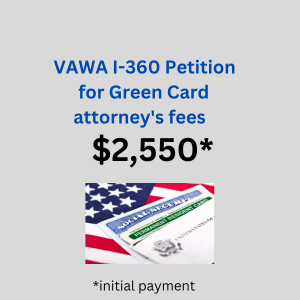
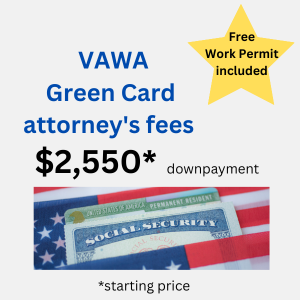
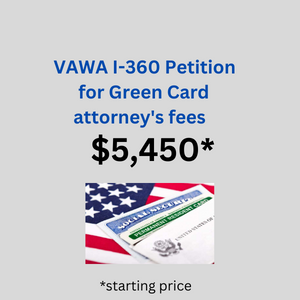
When you call most attorneys’ office to try and get a quote for your case you can’t get a straight answer. You may hear that you will need to speak with the attorney or worse yet that they charge by the hour. It doesn’t have to be this way. At Fletcher Law, we publish our fees so that you can have a good idea of how much your case will cost without even picking up the phone. We charge flat fees and offer flexible payment plans. Click here for the RATE SHEET.


What Are the Benefits of Hiring an Immigration Attorney?

Immigration law is a highly specialized and complex area of law. It is also fast changing and influenced heavily by each sitting U.S. President. We stay up-to-date and ensure that the correct law is applied to your case.

When you reach out to us, we take the time to carefully determine your eligibility for immigration benefits. We check for any issues that could prevent your application from being approved.

Sometimes, these issues can be overcome with evidence and legal arguments. Other times it can’t. What is important is that we are honest with you upfront so that you can make an informed decision about your case.

If you become a client of our firm, your case will get the personal attention it deserves. Each immigrant story is unique and it is important that it is presented properly. We put forward a comprehensive package to give you the best chance of winning your case.

My name is Cheryl Fletcher and I have been an immigration attorney since 2015. I’ve helped hundreds of immigrants get approved for green cards, visas and U.S. citizenship. We practice in all 50 U.S. states. I would like the opportunity to work with you. Book a consultation. You’ll be glad you did.

How Long After VAWA is Approved to Get a Green Card?

How Long After VAWA is Approved to Get a Green Card? Overview

“How long after VAWA is approved to get a green card?” is a legitimate question. When researching VAWA, you may wonder how long the entire process  will take. Rest assured, you have clicked on the right article. We will explore the answer thoroughly so that you will be able to manage your expectations.

Eligibility: The Three Categories of VAWA Applicants

VAWA means Violence Against Women Act, but men can also qualify. It allows certain abused persons to self-petition for a green card, without the need for a sponsor. Only three categories of abused persons are eligible for VAWA. You are eligible for VAWA if your U.S. citizen or lawful permanent resident spouse or parent abused you. Additionally, you may be eligible for VAWA if your U.S. citizen child abused you. It is important to note that abused parents of lawful permanent residents are not eligible for VAWA.

A solid I-360 petition shows the relationship between you and the abuser and should include various pieces of evidence documenting the abuse. The abuse can be physical, mental or both.

How much does VAWA cost?

What Impact Does Your Abuser’s Immigration Status Have on the Availability of Your Green Card?

After USCIS approves your I-360 form, your abuser’s immigration status determines how soon an immigrant visa becomes available,. The availability of the visa then dictates when you can get your green card. Form I-485 is the actual green card application. If you file only form I-360, you have not applied for a green card.

VAWA Applicants With an Abusive U.S. Citizen Relative

Parents, children, and spouses abused by a U.S. citizen are considered “immediate relatives.” The government offers an unlimited number of immigrant visas for “immediate relatives,” and these visas are always available. Once USCIS approves your I-360 Petition, a visa becomes available. As an immediate relative of a U.S. citizen, you may file the I-360 petition alone or you may file it with an I-485 Adjustment of Status application. A pending I-485 form, makes you eligible for work authorization and travel. You must apply for these two benefits using the appropriate forms. While waiting, you can work and travel, without being pre-occupied with the processing time for a VAWA green card.

VAWA Applicants With an Abusive Lawful Permanent Resident Relative

If your abusive relative is a lawful permanent resident, you cannot file for adjustment of status until your priority date is current. The priority date is the date USCIS receives your application, as noted on your I-360 receipt notice (I-797C Notice of Action). Due to visa backlogs, even if the I-360 is approved quickly, you must wait for the category to become current. The US visa bulletin, updated monthly, provides current category information.

Unlike applicants with abusive U.S. citizen relatives, those related to permanent residents cannot apply for work authorization while the I-360 is pending. You must wait until after I-360 approval to apply for adjustment of status, work, and travel authorization. This is possible, even without filing an I-485 adjustment of status application.

Processing Times for VAWA Green Card

The I-360 petition is processed by the Nebraska Service Center and it takes about two to three years for the agency to reach a decision. USCIS regularly updates its processing times based on its workload and the number of applications it receives. Even if you file your I-485 application with your I-360 petition, is not being evaluated until after there is a decision on form I-360.

Processing times for your I-485 application vary according to which local office is responsible for adjusting your status. The state in which you live determines the processing office. As of 2025, it takes about 15 months, from approval of form I-360, for you to get a decision on your I-485 form. In total, it should take three to five years from the initial VAWA application for you to receive your green card.

VAWA I-360 Petition Approved but Adjustment of Status Application Denied?

Getting an I-360 VAWA petition approved does not guarantee that you will receive a green card. You may have inadmissibility issues that prevent USCIS from approving your adjustment of status application. Some of these issues include, a criminal record, unlawful entries to the U.S. health issues, or membership in certain groups.

For some issues, you may be able to apply for an I-601 waiver to “forgive” you so that you can get your green card. On the other hand, some issues are not waivable and you won’t be able to get your green card.

Divorce after permanent green card issued

How an Immigration Attorney Can Help?

My name is Cheryl Fletcher and I have been an immigration attorney since 2015. I have helped hundreds of survivors of domestic violence through the VAWA immigration process.

We will properly evaluate your case and take the right steps to ensure it is processed in a timely manner.

If you would like to speak with me about you case, feel free to reach out to us by clicking the orange button below.

Immigration attorney fees

Watch Attorney Fletcher explain the 8 eligibility requirements for a successful VAWA petition. WATCH NOW.

Can VAWA be Appealed?

Can VAWA be Appealed? Overview

“Can VAWA be appealed?” The simple answer to this question is “yes” but the legal requirements for a strong appeal are quite complicated. When you file an appeal, you are saying that  United States Citizenship and Immigration Services (USCIS) or the immigration judge made a mistake. You are requesting that the Administrative Appeals Office (AAO) or the Board of Immigration Appeals (BIA) take a second look at your case and agree with you.

How to File an Appeal?

The denial notice from USCIS provides information on how to file an appeal. You should mail your appeal to the address listed on the notice. If you lost your case in immigration court, you should send your appeal to the Board of Immigration Appeals (BIA). You have 30 days to file an appeal.

Can VAWA be Appealed? Should You File an Appeal?

Even though it is your right to file an appeal, this is not the only factor you should consider when you are thinking about whether to appeal a denial. Moreover, for court cases you should have reserved your right to appeal, otherwise you gave up that right. Some cases are rightly denied and other cases are mistakenly denied. You should assess your chances of winning before you spend time and money pursuing an appeal. Consult with a good immigration lawyer to help you make this decision.

Can VAWA be Appealed? Factors to Consider When Deciding Whether to File an Appeal

  1. Erroneous Decision

The most important factor to consider when deciding whether to file an appeal is whether the decision to deny your case was incorrect. To answer this question you must know the legal requirements for VAWA. A good immigration attorney is invaluable for this analysis. The lawyer will be able to apply the law to the facts of your case and see whether the decision was correct.

2. Likelihood of Success

Although no one can say for certain whether you will win your appeal, you can evaluate your chances. You should carefully review the Notice of Decision or the order from the immigration judge. So, although “can VAWA be appealed?” is a great question. “what are my chances?” is an equally important question.

3. Employment While Your Case is Pending

It takes many years for you to get a decision on your VAWA case. You may have secured work authorization and are working at the time that you received the negative decision. If you don’t appeal, the VAWA denial decision becomes permanent and you will lose any work authorization that you gained while your VAWA case was pending. If you appeal, your case is technically still open and you can continue to renew your work permit.

4. Cost of an Appeal

It is not cheap to file an appeal because of the amount of legal work that is involved. In addition, all of the work must be done upfront because the appeal is due within 30 days. A good appellate lawyer will review your case thoroughly and submit an appellate brief, additional evidence, and immigration forms. The appellate brief requires numerous hours of legal research and writing. This is the lawyer’s tool to analyze your case and persuade the appellate body that your case should not have been denied.

When trying to decide whether it is worth it to file an appeal, you should ask yourself “how much is a green card worth?” A green card allows you to live and work in the U.S. permanently, without limitation. When you compare how much you can make over your lifetime versus how much an attorney will charge you for an appeal, your lifetime earnings should be significantly higher than what the attorney will charge you. Although an attorney cannot guarantee that you will win your appeal, it is worth a shot if you have the right case.

5. Other Options

Sometimes an appeal is not the best option. If you did not provide sufficient evidence with your first petition, and are still married, you may be able to refile the case instead of appealing. If your divorce was finalized less than two years ago, you can refile your case. The benefit of refiling is that you do not have to prove that the first decision was incorrect. Some other options that do not require appealing include entering into a bonafide marriage with someone else, or applying for a T or U visa.

What if You Missed the Deadline for an Appeal?

USCIS gives you 30 days after service of the denial to file an appeal. You have 3 extra days if you received the decision by mail. If your appeal is late USCIS may still accept it and treat it as a Motion to Reopen or Motion to Reconsider.

The Board of Immigration Appeals has a strict 30-day deadline to file an appeal. The 30 days begins either when the court issued an oral ruling or mailed the decision. If you missed the deadline with the Board, it is very rare for this appellate body to accept your late appeal. The Board will likely dismiss your case.

You may file a Motion to Reconsider with the immigration judge, within 30 days of the denial. If you missed the 30-day appellate window with the BIA, you likely also missed the 30-day deadline for a Motion for Reconsideration. Both dates run simultaneously. Your only option then is to file a Motion to Reopen your VAWA removal case with the immigration judge, citing new facts that were either unknown or inaccessible at the time of your original hearing. Generally, a Motion to Reopen must be filed within one year of the immigration judge’s final order, but there are some exceptions.

Can VAWA be Appealed? Immigration Attorney

My name is Cheryl Fletcher and I have been an immigration attorney since 2015. I have helped countless abuse victims with their VAWA case. During a private online consultation, I’ll explain your rights and together we evaluate your chances of success. Take a step forward and eliminate the uncertainty regarding your future in America.

Immigration attorney fees

How Much Does VAWA Cost?

How Much Does VAWA Cost? Overview

“How much does VAWA cost?” is the very next question to think about after checking your eligibility. VAWA means Violence Against Women Act and both men and women can apply. VAWA offers U.S. permanent residence and support to survivors of domestic violence, sexual assault, and other forms of gender-based violence. In this article, we will explore the expenses involved in applying for VAWA .

VAWA Application Fees

Before spending any money, it is best to check the eligibility requirements for VAWA. Only an abused spouse or child of a U.S. citizen or lawful permanent resident can qualify for VAWA. Additionally, a parent who is abused by a U.S. citizen child can also qualify. Abused parents of U.S. lawful permanent residents do not qualify. VAWA self-petitions allow survivors to seek legal status independently of their abusers. Your abuser does not need to sign anything for you to get your VAWA green card.  USCIS has a dedicated VAWA unit to accept and process self-petitions. Several steps and applications are involved in the process. The items outlined below will answer the question: “How much does VAWA cost?”

  1. Form I-360, Petition for Amerasian, Widow(er), or Special Immigrant: This form tells USCIS that you have been abused and that there is a qualifying relationship between you and the abuser. There is no filing fee for this form. You may file it alone or with an I-485 Adjustment of Status Application.
  2. I-485 Adjustment of Status: Form I-485 is the actual application for a green card. As of April 1, 2024, there is no fee for this form for VAWA self-petitioners, and USCIS has waived the biometrics fee.
  3. Employment Authorization: VAWA self-petitioners with a pending adjustment of status application can apply for a free employment authorization document by filing Form I-765.
  4. Medical Examination: Applicants must undergo a medical examination using a USCIS-approved doctor. Fees range from $250 to $700.
  5. Translations: Any non-English documents must be translated into English. Translation fees typically start at $50 per document.

Should I Use an Immigration Attorney for My VAWA Application?

When it’s time to file for VAWA you may be tempted to go with the option that costs as little as possible. The cheapest way to do your VAWA application is to do it yourself. This will cost you nothing out of pocket. However, since you don’t know what you are doing, you are likely to make many mistakes. Some of these mistakes can ruin a good VAWA case. Moreover, by the time you realize your mistake, you may no longer be eligible for VAWA.

The second cheapest way to apply for VAWA is to use an unlicensed form preparer. These individuals advertise themselves as “immigration assistants”or “notarios.” They may even have an office or a place of business. They will take your money, fill in the forms and submit the application with a few pieces of evidence. This is something you could have done yourself by going online and printing the forms and reading the instructions.

The issue with the do-it-yourself option or unlicensed form preparers is that you do not have the best chance to win your VAWA case. A properly prepared VAWA application package is at least 200 pages. It tells a compelling story of your life, the abuse you suffered, and why USCIS should approve your case. This type of work cannot be done quickly or cheaply. You want high quality immigration work at an affordable price and this is where we can help you.

How much does VAWA cost?

Why Choose Us?

My name is Cheryl Fletcher and I have been practicing immigration law since 2015. I have helped hundreds of VAWA applicants successfully obtain green cards. Potential clients call us at various points in their lives. Sometimes they are still living with the abuser and other times, they are in the middle of a divorce. Regardless of the situation, we are more than happy to help.

We offer flat fee pricing with flexible payment options. You know exactly how much your case is going to cost before hiring us.

If you are feeling overwhelmed because of a domestic violence situation and you have heard about VAWA but you are not not sure if it is right for you, please reach out to us. I will spend 30 minutes explaining you rights and legal options and put you on the best road to achieve your goals.

Immigration attorney fees

Watch Attorney Fletcher explain the 8 eligibility requirements for a successful VAWA petition. WATCH NOW.

Fiance visa cost

Does VAWA Require Marriage?

Does VAWA Require Marriage? Overview

“Does VAWA require marriage?” is an excellent question and one that you should consider carefully before applying for VAWA. My name is Cheryl Fletcher and I am an immigration attorney. In this article, we will fully answer this question so that you will have a basic understanding of the VAWA marriage requirements.

Who is Eligible for VAWA?

VAWA means Violence Against Women Act and both men and women are eligible for immigration benefits under this law. Spouses and children abused by a U.S. citizen or U.S. permanent resident can apply for a VAWA green card. Abused parents of U.S. citizens are also eligible.

Vawa Marriage Requirements for an Abused Spouse

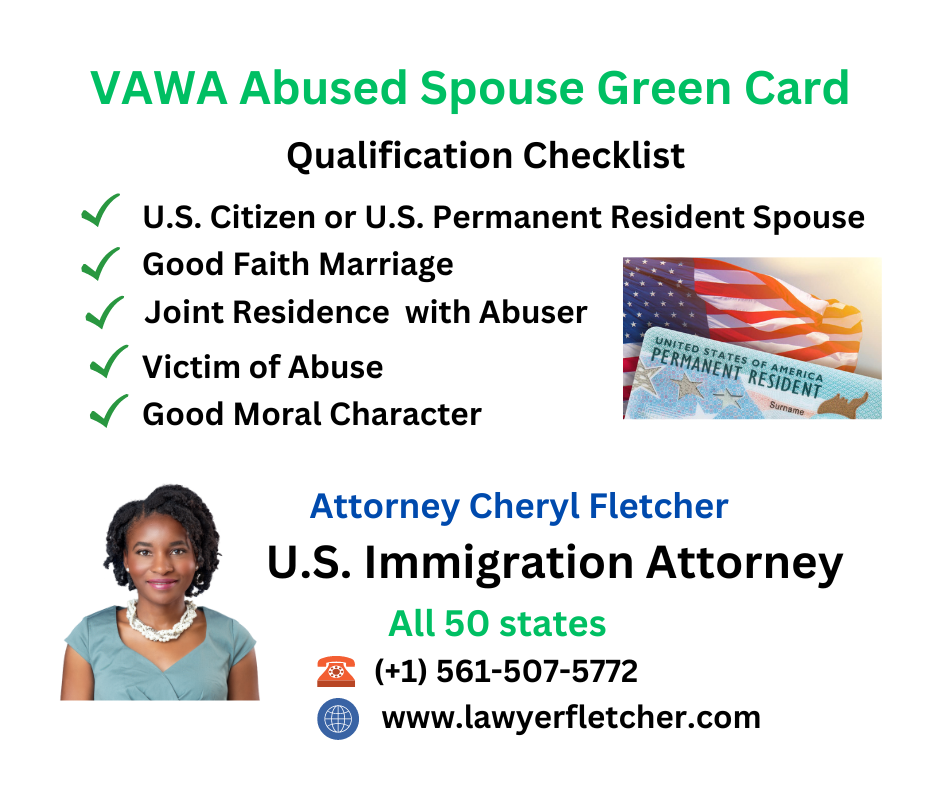
To be eligible for VAWA, an abused spouse must: 1) have resided with his or her U.S. citizen or U.S. permanent resident spouse; 2) was battered or subject to extreme cruelty during the marriage; 3) have entered into the marriage in good faith; 4) be eligible for immediate relative or preference status; and 5) be a person of good moral character.

It is important to note that your marriage must be bona fide. This means that you and your spouse intended to build a life together when you decided to marry. Wedding photographs, joint residence, shared bank accounts, affidavits from friends and relatives, and joint utility bills can prove that you had a good faith marriage. A marriage entered solely for immigration benefits is a sham and does not qualify as a good faith marriage.

You must file the I-360 Petition for Amerasian, Widow(er), or Special Immigrant while married to the abusive spouse or within two years of the divorce, the abuser’s death or the abuser’s loss of U.S. citizenship or U.S. permanent resident status. A battered ex-spouse may remarry after the I-360 is approved, but remarrying before approval will result in a denied case.

Three Types of Marriages That May Qualify for VAWA


a. Civil marriage: This type of marriage is the most common and is easy to recognize. In most cases, the state or province where you are getting married issues a marriage license. An official or authorized person must perform the ceremony. Afterward, you apply to have the marriage recorded in the official government records. You will receive an original certificate with the marriage details. A certified copy of this document is valid for a VAWA application.

b. Common-law marriage: A common law marriage legally recognizes two people as married even though they do not have a marriage license or ceremony. In this arrangement, two people capable of marrying live together as husband and wife and present themselves as a married couple. If your U.S. state or foreign country legally recognizes common law marriage, this is sufficient for a VAWA application. Evidence of cohabitation with your common-law spouse and a copy of the relevant law can help you prove your case.

c. Religious marriage: A religious official can perform a wedding that meets all statutory requirements, and it qualifies as a legal marriage. This type of marriage is also recognized for VAWA purposes, as long as it is legal in the state or country where it took place.

Any of the types of marriages mentioned above are eligible for VAWA. Issues such as bigamy, consanguinity, and public policy can complicate a marriage’s validity. However, VAWA recognizes bigamous marriages if the abused spouse believes they were in a valid marriage. These issues are highly complex and it is best to speak with a qualified immigration attorney.

VAWA Marriage Requirements for a  Child Beneficiary

The government automatically includes an abused spouse’s child as a derivative beneficiary without requiring a separate petition. This includes the abuser’s stepchildren and adopted children. The marriage must have occurred before the child turned 18 years old. The child does not need to have suffered abuse or lived with the abuser. For the child to be eligible for VAWA, the law must legally recognize the marriage between the VAWA spouse and the abusive U.S. citizen or U.S. resident. The marriage does not need to be bona fide, and the abuse does not have to have occurred during the marriage. The child must be unmarried and under 21 when the I-360 is filed, but he or she will not “age out” even if the petition is not approved until after their 21st birthday.

Aged out Children: An abused child of a U.S. citizen or lawful permanent resident may file a VAWA petition until age 25 if he or she can demonstrate that the abuse was at least one central reason for the filing delay. To be eligible to file until age 25: 1) the child must have qualified to file before age 21; 2) there must be a strong connection between the abuse and the filing delay; 3) the I-360 must be filed before the child reaches 25; and 4) the child must be unmarried.

VAWA Marriage Requirements for an Abused Parent

Natural, adoptive, or stepparents are eligible for VAWA if the abusive U.S. child is 21 or older at the time the parent files. For stepparents, the marriage must have existed before the abusive child turned 18.

"Who qualifies for VAWA" ad

How an Immigration Attorney can Help?

After reading this article, you should have learned that the answer to the question, “does VAWA require marriage” is yes.

I have been practicing immigration law since 2015. I have helped hundreds of VAWA applicants through the application process. At my law firm, we review the facts of your case thoroughly to determine the best strategy to achieve your goals.

We have received approvals for cases that other attorneys thought were not possible.

Please fee free to reach out to us for a case evaluation.

Immigration attorney fees

Watch Attorney Fletcher explain the 8 eligibility requirements for a successful VAWA petition. WATCH NOW.

Who Qualifies for VAWA?

Who Qualifies for VAWA? Overview

“Who qualifies for VAWA?” is an important question for immigrants in the U.S. who find themselves in abusive relationships. VAWA means Violence Against Women Act. It is a special law that allows certain qualified men and women to self-petiton for a green card without the need for a sponsor.

What are the Requirements for a Spousal VAWA Green Card?

Only a spouse, unmarried child, or parent who experiences abuse from a U.S. citizen or lawful permanent resident (green card holder) qualifies for VAWA. A parent abused by a lawful permanent resident does not qualify.

Spouse Eligibility for VAWA

An “abused spouse” is someone who marries a U.S. citizen or lawful permanent resident and faces “battering” or “extreme cruelty.” Abuse can include physical harm, verbal abuse, or controlling behavior.

To qualify for VAWA, a spouse must prove the following:

  1. Qualifying Relationship: The spouse must be married to a U.S. citizen or green card holder. Prove this with a birth certificate, passport, naturalization certificate, or green card. In some cases, common-law marriages or marriages affected by bigamy may qualify.

  2. Evidence of Abuse: Submit a statement describing the abuse, along with supporting documents like police reports, court records, medical reports, psychological evaluations, and affidavits from witnesses.

  3. Bona Fide Marriage: The marriage must be real, even if it’s ending. Support this with wedding photos, joint bank accounts, or life insurance policies.

  4. Joint Residence: You must have lived with the abusive spouse. Provide proof with lease agreements or home deeds.

  5. Good Moral Character: You must show good moral character, meaning you are no worse than the average person in your community. A clean FBI background check serves as proof. If you have a criminal record, consult an immigration attorney, as certain offenses may not automatically disqualify you.

Parent or Child VAWA Green Card: Eligibility

Child Eligibility for VAWA

“Who qualifies for VAWA?” also includes certain children. A “child” is an unmarried person, under 21 years old who suffers abuse at the hands of their U.S. citizen or permanent resident parent. This category includes step-children. Children up to 25 years old are eligible to file if he or she can prove that the abuse was the main reason for delaying the filing. The child must also have resided with the abusive parent/step-parent and be a person of good moral character.

A child less that 14 years old is presumed to be a person of good moral character. The child may file an independent petition. In this case, the child must have resided with the abuser. The child may also be a derivative on the abused spouse’s petition, if the abuser abused his or her mother or father. In that case the child does not have to have lived with the abuser.

Parent Eligibility for VAWA

A VAWA parent must have resided with the abusive daughter or son and must prove the parent/child relationship. Strong evidence includes money order receipts or cancelled checks showing financial support, insurance policies listing the child as dependent, school records, correspondence between the child and the parent and notarized affidavits of friends or neighbors with knowledge of the relationship. The parent must also be a person of good moral character and present evidence of the abuse.

Adjustment of Status for a VAWA Applicant

If you meet the eligibility requirements for VAWA you may be able to obtain permanent residence. An adjustment of status application may be filed jointly with the I-360 petition or may be filed after the I-36o petition is approved.

If you had filed an I-485 Adjustment of Status Application with an I-130 petition you may be able to save it without having to pay a second filing fee. An experienced immigration attorney will best be able to advise you on the procedures to accomplish this feat.

Adjustment of Status Requirements

To apply for adjustment of status, you must meet the following requirements:

  1. Photographs: Submit two recent identical color passport-style photographs.

  2. Entry: You must be present in the U.S. to file. VAWA allows adjustment even if you entered without inspection.

  3. Proof of Identity: Provide a photocopy of a government-issued identity document with your photo, such as a passport, driver’s license, or national ID. Expired documents are acceptable.

  4. Birth Certificate: Submit a long-form birth certificate listing at least one parent. If unavailable, provide proof of its unavailability and alternative evidence, like school or medical records, or personal affidavits.

  5. Admissibility: You must be admissible. There should be no issues in your criminal or medical history that would prevent green card approval. Some offenses or medical conditions may be forgiven through a waiver.

  6. Medical Examination: Undergo a medical exam with a USCIS-approved doctor.

  7. Criminal History: Submit court records and police reports regarding your criminal history.

How An Immigration Attorney Can Assist?

My name is Cheryl Fletcher and I have been practicing immigration law since 2015. I have helped hundreds of VAWA applicants successfully obtain permanent residence. After reading this article you should have a much clearer understanding of “who qualifies for VAWA.”

If you have lost hope or are confused by the VAWA process, please fee free to contact me using the booking button below. I will take the time to explain you rights and advise you on the best strategy to achieve you goals.

Who qualifies for VAWA?

Watch Attorney Fletcher explain the 8 eligibility requirements for a successful VAWA petition. WATCH NOW.

Go to Top