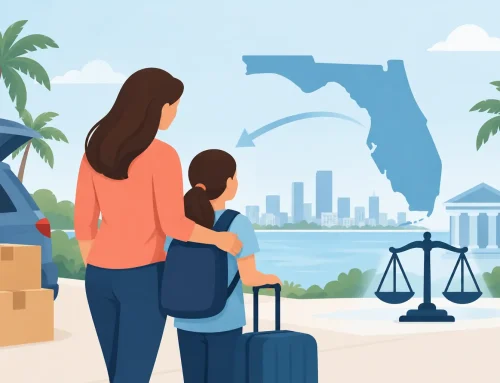


The decision to end a marriage often comes after months or years of stress, uncertainty, or conflict. Knowing how to file divorce in Florida can give you a clearer path forward, but the paperwork is only one part of the process. The choices made at the beginning can affect your home, savings, parenting time, support, and long-term stability.
Florida calls divorce a “dissolution of marriage.” You do not need to prove adultery, abandonment, or another spouse’s misconduct to file. Most cases are based on the claim that the marriage is “irretrievably broken.” Even so, a straightforward filing can become complicated when children, significant assets, debt, abuse, immigration concerns, or disagreement over finances are involved.
How to File Divorce in Florida: Start With Eligibility
Before filing, make sure Florida has authority over your divorce. At least one spouse must have lived in Florida for six months before the petition is filed. Residency can often be shown with a Florida driver’s license, voter registration, lease, utility records, or testimony from a witness who knows you have lived in the state.
You generally file in the circuit court for the county where either spouse lives. For residents of West Palm Beach and surrounding communities, that is typically Palm Beach County. Filing in the right court matters. A filing error may cause delays when you are already trying to create stability for yourself and your children.
Florida has two main paths: simplified dissolution and regular dissolution. Simplified divorce is available only in limited situations. Both spouses must agree to use the process, have no minor or dependent children together, have no pregnancy, agree on dividing property and debt, and waive alimony. If either spouse wants support, disagrees about assets, or there are children involved, regular dissolution is usually the appropriate route.
Prepare the Petition and Required Financial Information
A regular divorce begins when one spouse, called the petitioner, files a Petition for Dissolution of Marriage. The petition tells the court basic information about the marriage and identifies the relief being requested. That may include equitable distribution of property and debts, alimony, child support, parental responsibility, parenting time, and restoration of a former name.
Do not treat the petition as a formality. It frames the issues the court will be asked to decide. If you are concerned about keeping the marital home, protecting a retirement account, receiving support, or ensuring a safe parenting arrangement, those concerns should be addressed early and carefully.
Florida also requires financial disclosure. Each spouse typically completes a Family Law Financial Affidavit that lists income, expenses, assets, and debts. Depending on the case, mandatory disclosure may include bank statements, tax returns, pay stubs, credit-card statements, loan documents, retirement account records, and other financial information.
Gather records before they disappear, are changed, or become difficult to access. Make copies of important account statements, insurance policies, mortgage documents, vehicle titles, business records, and communications that may relate to parenting or finances. Do not hide assets, empty accounts, or destroy documents. Those actions can damage your credibility and may lead to court consequences.
File the Case and Serve Your Spouse
After the petition is prepared, it is filed with the clerk of court. Filing fees apply, although a person with limited income may be able to request a fee waiver. Once filed, the other spouse must receive formal notice of the case unless they agree to accept service.
Service is not simply sending a text message or leaving papers on a kitchen counter. In many cases, the sheriff or a certified process server personally delivers the divorce papers. If your spouse signs a proper waiver or acceptance of service, formal personal service may not be necessary.
After being served, the responding spouse generally has 20 days to file an answer. If they do not respond, the petitioner may be able to seek a default. A default does not automatically mean the court will grant every request. The judge still must ensure that the requested relief is legally supported and fair under Florida law.
If you do not know where your spouse is, do not assume you can move ahead without notice. Service by publication may be possible in some circumstances, but it has strict requirements and can limit the court’s ability to decide certain financial issues.
Address Immediate Safety, Parenting, and Financial Needs
Divorce cases can take time, and many families cannot wait until the final hearing to address urgent needs. Florida courts can enter temporary orders for child support, parenting time, use of the home, payment of bills, attorney fees, or temporary alimony while the case is pending.
If domestic violence, stalking, threats, or coercive control are present, safety comes first. A domestic violence injunction may be available and can address contact, temporary use of a shared residence, and protections for children. Keep records of threatening messages, police reports, medical documentation, and other evidence, but avoid putting yourself at greater risk to collect proof.
When children are involved, the court focuses on their best interests. Florida generally expects parents to share parental responsibility unless shared decision-making would be harmful to the child. A parenting plan must address major decisions, communication, school and medical issues, holidays, and a time-sharing schedule. The goal is not to “win” against the other parent. It is to build an enforceable plan that protects the child’s well-being and provides needed structure.
Understand What Must Be Resolved Before Divorce Is Final
A divorce is not final until the spouses reach an agreement approved by the court or a judge resolves the disputed issues. The major questions usually involve property and debt division, support, and children.
Florida follows equitable distribution, which means marital assets and liabilities are divided fairly, not always exactly 50-50. The date an asset was acquired, how it was funded, whether it increased in value during the marriage, and whether either spouse used marital money for nonmarital purposes can all matter. A house, pension, business, investment account, credit-card balance, or inheritance may require closer analysis than people expect.
Alimony depends on the facts of the marriage, including each spouse’s financial need and ability to pay. The length of the marriage, earning capacity, health, contributions to the household, and sacrifices made for a spouse’s career may be relevant. Child support is calculated under Florida guidelines, but income, child-care costs, health insurance, overnights, and other details affect the final number.
Some cases resolve through negotiation or mediation. Others require hearings, discovery, depositions, or trial. Settlement can save time, expense, and emotional strain when both sides have reliable financial information and are negotiating in good faith. But an agreement should not be rushed simply because you want the conflict to end. A poorly drafted settlement can leave major issues unresolved for years.
Consider Divorce Issues That May Need Extra Attention
A spouse’s immigration status can make divorce especially stressful. Divorce does not automatically end every immigration benefit, but it can affect a pending marriage-based green card case, a conditional permanent resident’s next filing, or a person’s ability to show a good-faith marriage. Survivors of abuse may have protections and options that should be discussed privately with qualified counsel.
Business ownership, hidden income, retirement benefits, and high-conflict custody disputes also call for a more deliberate strategy. What looks like a simple disagreement over a bank account may involve tracing separate and marital funds. What appears to be a scheduling dispute may actually be a concern about substance abuse, school instability, or a parent withholding a child.
Get Advice Before You Sign Away Important Rights
You are allowed to represent yourself in a Florida divorce, particularly when there are no children, no significant assets, and a complete agreement. But self-representation carries real risk when the other spouse has an attorney, controls financial information, or pressures you to sign quickly.
A lawyer can help you evaluate the terms of a proposed agreement, request documents, seek temporary relief, and present a clear case to the court. Fletcher Law Office represents Florida families facing divorce, custody, support, and asset-division disputes with direct advice and focused advocacy.
You do not have to have every answer before taking the first step. Start by protecting your safety, preserving financial records, and learning what choices are actually available to you. A careful beginning can help you move forward with greater confidence and a stronger foundation for the life you are building next.